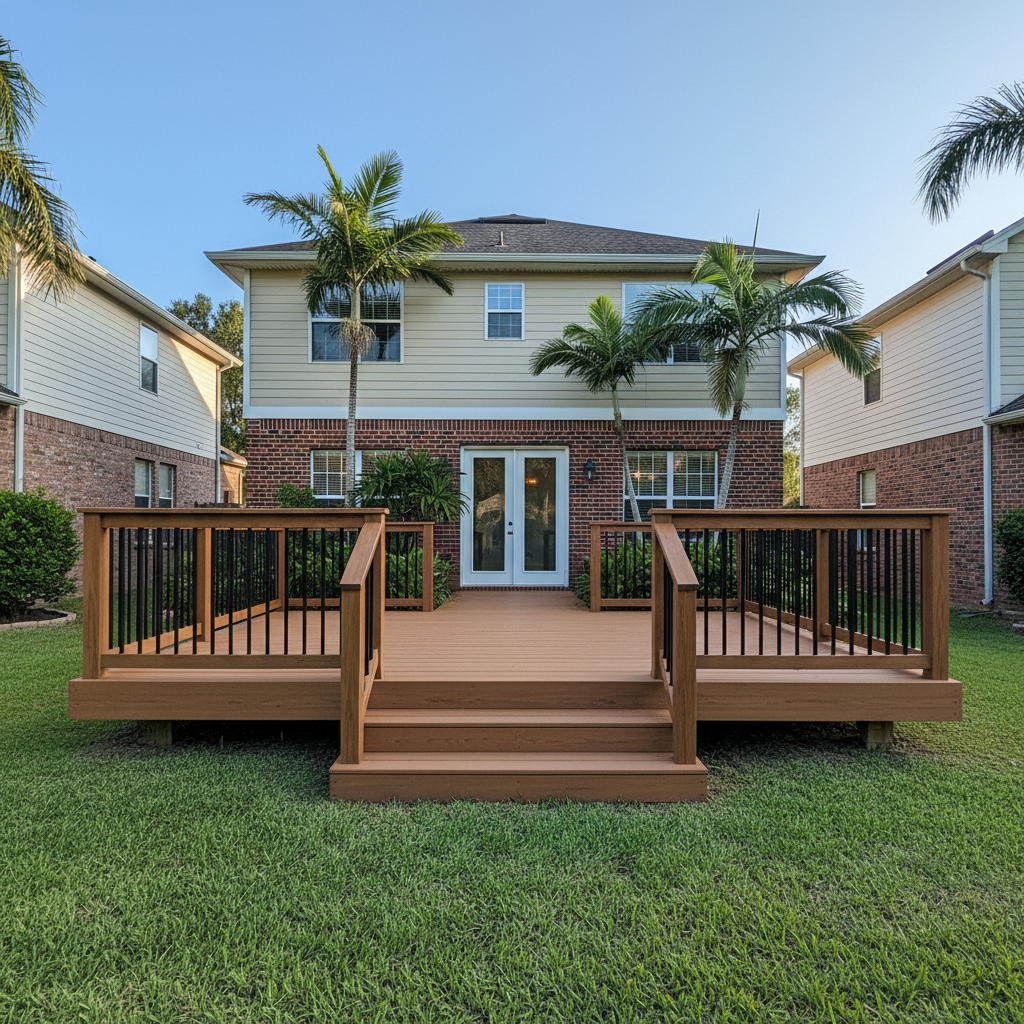
Arcadia sits on sandy soil near the Peace River, and that sand drains fast but it doesn't hold a footing the way clay does further north. A deck builder who's worked here knows that a post footing that would pass inspection in Ohio can shift here if it's poured too shallow or too narrow. Before you hire anyone, it helps to know what good work actually looks like in this part of Florida, because a lot of bad work looks fine for the first two years.
What the ground and climate here actually do to a deck
Most footings around Arcadia go in at least 24 inches down, sometimes deeper depending on soil conditions on your lot, with a bell-shaped base or a sonotube wide enough to spread the load. In sandy soil that drains well, that depth matters less for frost (we don't get a frost line here) and more for holding the post steady against wind and against the soil washing out around it in a hard summer storm.
June through September brings the rainy season, and a downpour can dump an inch of rain in under an hour. If your lot doesn't grade away from the house, that water sits right under the deck, and untreated or poorly flashed framing rots from the joists up, not from the top down. Subterranean termites are active here year-round, not seasonally, so any wood touching soil needs to be rated for ground contact, not just pressure treated for weather. Ask what retention level the lumber carries. Ground-contact rated pine is usually .40 retention; anything less is meant for framing that never touches dirt.
Hurricane season runs June to November, and that affects railing posts and ledger attachment more than people expect. A ledger board bolted to the house with 1/2-inch lag bolts every 16 inches, with flashing tucked up under the house wrap, holds up to wind load a lot better than one just screwed on and caulked. If a builder can't tell you how they're attaching the ledger, that's worth asking twice.
Permits aren't optional, and that matters before you get a quote
Most deck work in Arcadia and the unincorporated parts of DeSoto County needs a building permit, especially anything attached to the house or built more than 30 inches off the ground. The county or city building department will typically inspect the footings before they're poured over, check the ledger attachment, and do a final look at railing height and guard spacing before they sign off. A setback check against your property line is common too, particularly on older lots downtown where the house sits closer to the line than newer subdivisions allow.
A contractor who tells you permits aren't necessary, or that they'll just "handle it quietly," is telling you they don't want an inspector looking at their footings. That's the opposite of reassuring. HOAs aren't universal out here the way they are in some of the newer coastal developments, but a few of the newer subdivisions around Arcadia do have design review for decks and pergolas, so it's worth checking your deed restrictions before you sign a contract, not after the posts are in the ground.
What a real written bid should include
A one-page quote that just says "build 12x16 deck, $8,200" isn't a bid, it's a guess. A real bid names the lumber species and treatment, the footing depth and diameter, the joist spacing (16 inches on center is standard, 12 inches if you're running composite decking that needs tighter support), and the hardware. Galvanized joist hangers rated G185 hold up against Florida humidity; cheaper electroplated hangers rust out in five or six years and nobody notices until a joist drops.
If you're going with composite decking instead of wood, the bid should also say what gap they're leaving between boards, usually 1/8 to 3/16 inch depending on the brand, because composite expands and contracts with heat more than people expect in our summers. A deck that looks tight in March can buckle in August if that gap wasn't left.
- Footing size and depth, in writing, not "per code"
- Lumber grade and treatment rating, or decking brand and fastening system
- Hardware spec, especially hangers and ledger bolts
- Who pulls the permit, and that it's included in the price
- A payment schedule tied to completed stages, not one lump sum up front
Red flags that mean you walk away
Any deck builder who wants full payment before they've poured a single footing is a red flag. So is one who can't name their license number without checking. Florida requires a state contractor license for structural work like deck framing, and you can verify that license yourself before you hire anyone.
Watch for a quote that's dramatically lower than two or three others for the same size deck. That gap usually means thinner joists, fewer footings than the span needs, or lumber that's framing-grade rather than ground-contact rated. On an older Arcadia lot where the existing house is on piers from the 1920s, a builder also needs to actually get under there and look before quoting, not just measure from the yard. If someone gives you a firm number without ever getting under the house or checking the soil, that number isn't based on anything.
Walk away from anyone who won't put a start and finish date in writing, or who tells you the deck doesn't need a permit because "it's not attached." Freestanding decks over a certain height and size usually need one too.
Questions worth asking before you sign anything
Ask how many footings they're planning and why that number, given the span. Ask what happens if they hit standing water or soft fill digging the footings, which does happen on lots near the river bottom. Ask how long before the deck is safe to walk on after the concrete goes in, typically a few days, though full cure for structural load takes closer to a week in our heat and humidity. Ask what the warranty covers on labor versus what the material manufacturer covers, because those are two different things and a lot of homeowners find that out the hard way after a board starts cupping.
A builder who answers these without hesitation has probably poured footings in DeSoto County soil before and dealt with a rainy afternoon that pushed the schedule back. That's normal here. We've built and repaired decks across Arcadia and the surrounding towns, and you can see more of our deck builder work if you want to know what a finished job looks like before you ask anyone for a quote.