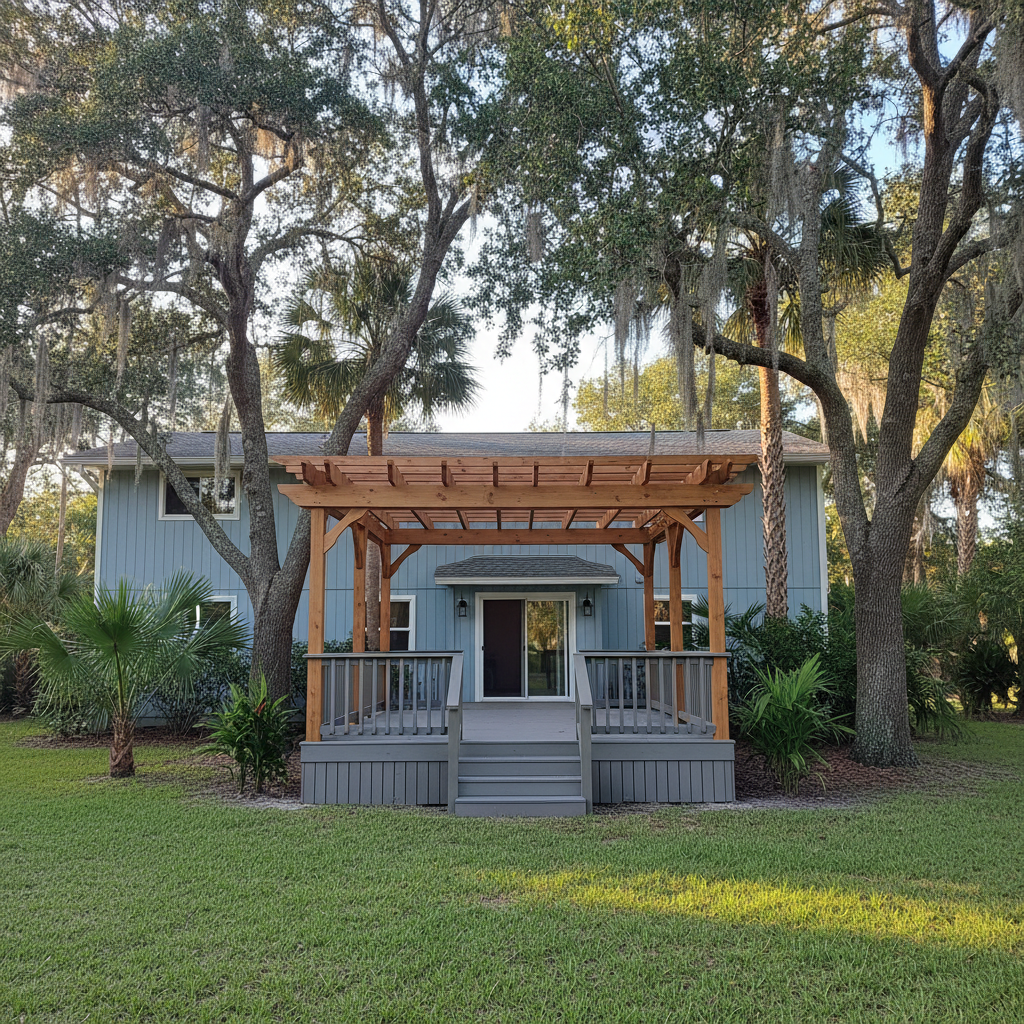
Arcadia sits on flat, sandy ground, and most people assume that means an easy dig. Sometimes it is. But sandy soil behaves differently depending on where your lot sits relative to the Peace River, how much fill was brought in when the house was built, and how deep the water table runs under your yard. A deck that goes in fine on a dry, elevated lot out past 70 can hit standing water two feet down on a lot closer to the river. We treat every site like it's its own case, because here, it usually is.
Sandy soil, but not all the same sand
Native DeSoto County soil is mostly sand with some areas of sandy loam, and it drains fast compared to clay soils up north. That's good news for footings in the sense that we don't fight frost heave, there's no frost line to dig below here, which is a real difference from colder states where footings have to go 36 to 48 inches down just to survive winter. Our concern is bearing capacity, not frost.
Loose, dry sand compacts easily under a footing. Fill sand, the kind trucked in to level a lot before a house or addition went up, can be loose and inconsistent, and it's common in Arcadia's newer subdivisions built over old pasture and citrus grove land. When we hit that, we go wider on the footing or deeper, sometimes using a helical pier instead of a poured concrete pad, because a helical pier screws down past the loose fill into soil that can actually hold a load. On older lots near downtown, where houses date back to the early 1900s, we sometimes find old brick, old well casings, or buried citrus stumps a foot or two down. None of that shows up until we're digging.
Water table and the Peace River floodplain
Parts of Arcadia sit inside the Peace River's floodplain, and after Hurricane Ian in 2022, a lot of homeowners here got a hard lesson in how high that water can come. Even on a normal year, lots closer to the river can have a water table within a few feet of the surface after the summer rainy season. That changes how we frame underneath a deck. We leave gaps for airflow instead of boxing the underside in solid, because trapped moisture under a low deck rots joists from underneath where nobody looks. If your lot is in a mapped flood zone, DeSoto County's permitting process will ask about elevation, and that can affect how low a deck or an attached screened porch structure is allowed to sit.
Grading matters too. A lot of Arcadia yards were leveled flat when they were built, with no real slope to move water away from the house. If your deck sits on the downhill side of a gutter downspout or a low spot that holds water after an afternoon storm, we grade and sometimes add a French drain before we ever set a post, because a footing that sits in standing water for half the summer won't hold the same way one does on dry ground.
Termites don't care how good your lumber is
Florida has heavy subterranean termite pressure, and DeSoto County is no exception. This changes a few real decisions on a deck build. Ledger boards, the piece that bolts the deck to the house, get flashed with a metal or self-adhesive membrane so wood-to-wood contact against the house siding doesn't trap moisture termites go for. Pressure-treated pine posts and joists are standard here for a reason, but the cut ends and any field drilling need a fresh coat of end-cut sealant, because that's the one spot the factory treatment doesn't reach. We'd rather spend ten extra minutes on that than have a homeowner finding soft wood at the base of a post three years in.
Heat, afternoon storms, and hurricane wind loads
June through September brings daily rain here, usually in the afternoon, which affects concrete cure time more than people expect. A footing pour needs a solid 48 hours before we put any real load on it, longer if a storm rolls through and soaks the forms before the mix sets up. We plan pours for mornings in rainy season and keep an eye on the radar, because redoing a footing costs more than waiting a day.
Wind is the other piece. DeSoto County is inland, so we don't get storm surge, but we still get hurricane-force wind during the season, and the building code here reflects that with post-to-beam and beam-to-ledger connections rated for uplift, not just downward load. That means galvanized or stainless hurricane ties at the joints, not just toe-nails, and post bases bolted into the footing rather than just set on top of it. It's not optional once an inspector is looking at the framing.
Permits, setbacks, and what actually gets inspected
DeSoto County's building department issues the permit for deck work here, and Arcadia doesn't have the thick layer of HOA review that some newer Florida subdivisions do, so most of the approval runs through the county rather than a homeowners association. A setback check against your property line is normal, especially if the deck pushes toward a rear or side yard limit. Inspections typically happen at two points: footing depth and placement before any concrete goes in, and framing once the structure is up but before decking boards go down. Skipping either one is how homeowners end up with a deck that can't legally be sold with the house later.
None of this is complicated once you know what the ground is doing under a given lot. It just takes someone checking before the first shovel goes in the dirt, instead of after. That's most of what Valor Deck Co does before we quote a job, walk the site, check the drainage, and figure out what the soil actually needs to hold, not just what it looks like from the yard.